Read the full story on Powell River Peak
For those living in more remote or rural areas of BC, an unexpected trip to Vancouver to see a doctor or specialist can be stressful and expensive, and for many, the travel costs can potentially put them into debt.
Last fall, Powell River resident Linnea Bryan, mother of three-year-old daughter Crislyn, found herself in such a situation. Her daughter needed to see a specialist at BC Children’s Hospital in Vancouver.
“I was kind of in a panic, because it’s expensive to go to the city,” said Linnea. “I reached out to Hope Air, and they covered everything; it was amazing.”
Hope Air is a charity that began in 1986, initiated by Jinnie Bradshaw and Joan Rogers, two women who were helping Canadian cancer patients get treatment. Since then the service has made more than 162,000 travel arrangements for those in need.
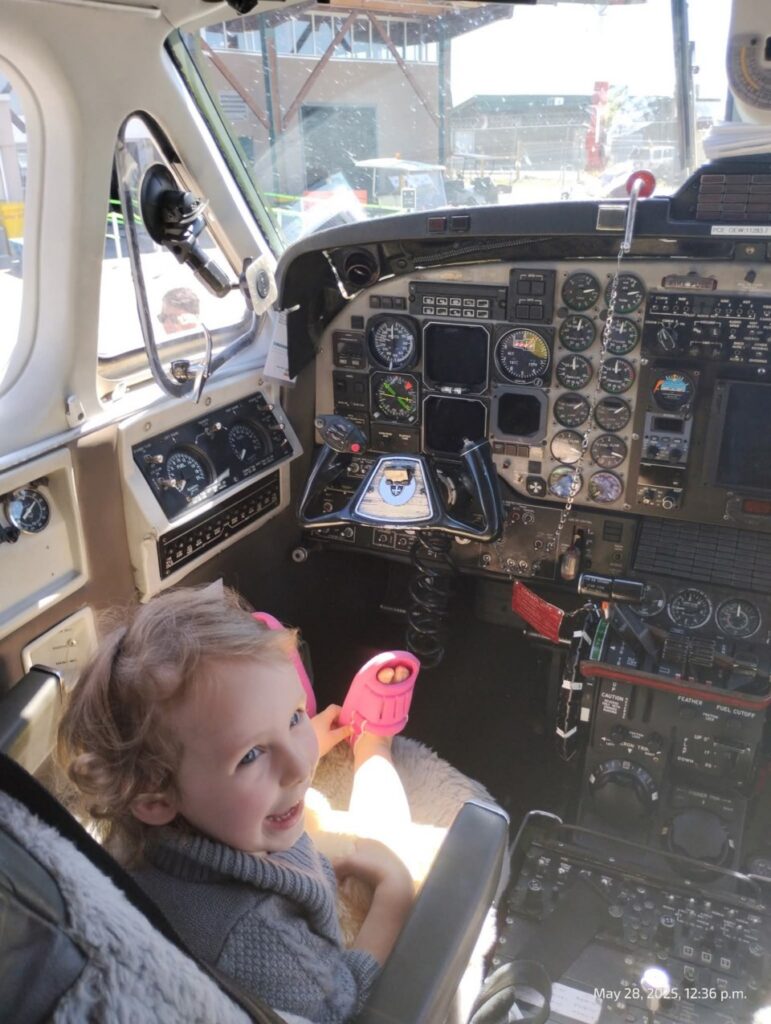
“We went down for a neurology exam, and Crislyn was pretty nervous and scared, but the staff and everyone [on the flight] were so great,” said Linnea. “The captain of the airplane let her sit in the front seat, so it made it very, very enjoyable for her.”
In 2025, Hope Air supported over 150 patient and escort trips from the qathet region, with more than 550 travel arrangements, including flights, hotel, airport ground transfers and meal vouchers.
“I’m a single mom, I don’t have a whole bunch of money,” said Linnea. “I stressfully reached out to a friend and told her Crislyn has to go and get this neural exam because she was having seizures.”
Her friend, who had used Hope Air in the past, told her how to contact them.
“After I sent in an application [and it was approved], they sent me my itinerary to tell me what time to get to the airport. All my cards for Uber got sent to my phone; everything was set up, like the shuttle and hotel,” explained Linnea. “It was just stress free.”
Stephanie Aldridge, vice president, patient experience for Hope Air’s BC program, said the charity offers flights from patients’ home communities into predominantly the Lower Mainland or major centres such as Kelowna and Prince George, for example.
“We like to say we’re not an airline, we are a lifeline,” said Aldridge. “We offer travel for the patient, and if they require an escort for medical reasons, we can support the seat for a flight as well.”
Aldridge said the charity partners with commercial airlines across Canada and BC, especially with regional partners, such as Pacific Coastal Airlines.
“We offer travel support for people in financial need; many of them are vulnerable individuals, such as children, seniors and those with disabilities,” said Aldridge. “The average cost to travel, to take a flight and a hotel stay is easily $2,000 per trip.”
Aldridge emphasized that individuals in financial need can’t afford that expense and so, unfortunately, either go into debt or often delay or cancel their care.
“They may be travelling to [BC] Children’s Hospital, they may be travelling for cancer treatment, cardiac care or diabetes; any service [covered under BC medical] that’s not available within their local community,” said Aldridge. “We’re actually celebrating our 40th anniversary this year; we were founded by a couple of incredible women [ Bradshaw and Rogers].”
Hope Air funds its services through donations and grants, but also with funding by the BC government.
“The provincial government has supported us to launch a cancer-specific travel program in the past three years,” said Aldridge. “Like many charities, we’re advocating very hard to have that funding renewed and continued for 2026.”
Aldridge said she appreciates the funding the province has provided over the years, but acknowledges the government is facing some hard fiscal realities.
“We just feel that this is an investment in the health of British Columbians,” said Aldridge. “We know what value we bring to the health-care system; not only are we investing private funds into the health system, but we’re supporting people to not end up in the [emergency room], because they’re able to get the right care, at the right time, and because they’re able to get access to that care.”
Linnea said Crislyn is doing much better since the trip to Vancouver to see a neurologist.
“We’re just really thankful for the positive experience she had; her scans came up good, and she hasn’t had any more symptoms,” said Linnea. “Crislyn kept calling it her big vacation, so I kept saying, ‘yup, you’re a rock star, it’s your big vacation.'”
To find out more about Hope Air, go to hopeair.ca/travel-support-services.